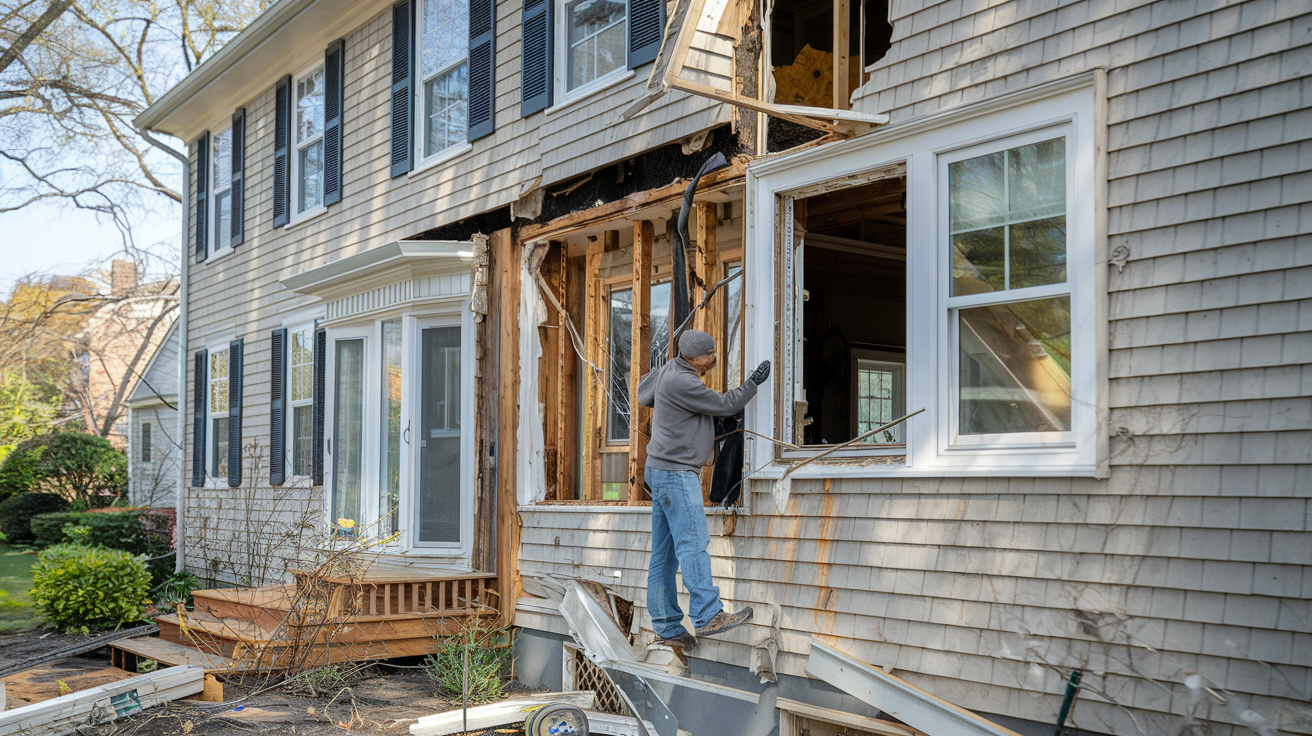
Woodcliff Lake homeowners often prioritize cosmetic renovations, but overlooking hidden water damage can lead to expensive structural repairs. What appears to be a simple siding replacement or a fresh coat of paint could mask significant problems that, if left unaddressed, can compromise the integrity of your home and inflate renovation costs.
The key issue is that New Jersey's climate, with its freeze-thaw cycles and heavy rainfall, accelerates water intrusion. Leaks around windows, roofs, and foundations can seep into building materials, causing wood rot, mold growth, and compromised structural supports. Addressing these issues requires more than just patching the surface; it demands a thorough inspection and remediation.
One of the most common scenarios involves siding replacement. Homeowners might opt for new siding to improve curb appeal without realizing that the existing siding concealed extensive rot beneath. In such cases, the underlying sheathing and framing must be repaired or replaced before the new siding can be installed. This adds significantly to the project's timeline and budget. Expect to pay between $500 - $3000 to replace damaged siding components on a wall with moderate damage. If structural components, such as studs, need replacement, the cost may climb substantially higher. The cost to remediate mold can add another 2000-10000 depending on the extent of the mold damage.
Similarly, seemingly minor roof leaks can cause significant damage over time. Water can penetrate the attic, damaging insulation and leading to mold growth. Over extended periods, this moisture can weaken roof rafters and trusses, potentially leading to roof collapse. Addressing this requires not only repairing the leak but also replacing damaged structural components.
The order of operations is crucial. A qualified inspector must first assess the extent of the damage. This often involves removing sections of siding, drywall, or roofing to expose the underlying structure. Once the damage is assessed, a plan for remediation can be developed. This might involve mold removal, wood replacement, and structural reinforcement. Only after these steps are completed can cosmetic repairs begin.
Ignoring water damage can also affect your homeowner's insurance. If damage results from negligence (e.g., failing to repair a known leak), your insurance claim may be denied. Furthermore, the New Jersey Supreme Court has addressed construction defect cases, clarifying what types of damage are covered under a general contractor’s liability policy. The court has ruled that resultant damage from defective work, such as damage to sheetrock or flooring caused by improperly installed siding or a leaky roof, can be covered under the contractor's insurance. This highlights the importance of hiring qualified contractors with adequate insurance coverage.
Finally, remember that cosmetic fixes that conceal structural problems can create significant problems during a home sale. A thorough home inspection will likely uncover these issues, potentially leading to renegotiations or deal breakers. Addressing water damage proactively is an investment that protects your home and its value.
Sources
- https://www.pricemeese.com/news/nj-supreme-court-to-decide/
- https://www.nj.gov/treasury/taxation/pdf/assessorshandbook.pdf
- https://www.epa.gov/system/files/documents/2024-03/nj-pcap.pdf
- https://nj.gov/state/bac/planning/documents/stateplan030101.pdf
- https://www.nj.gov/dca/codes/publications/pdf_lti/t_i_r.pdf